An On-Line Magazine Showcasing an Eclectic Mix of Current Events, News, Politics, Satire, Humor, Music, Sports & Entertainment, Motorsports and Aviation Engineering & Technology, Photos, and Random Thoughts From an American (and occasionally from his Kiwi wife) Living in New Zealand
Thursday, April 29, 2010
Another Cool 'Vette Vid + Bonus Video!
Here's a quick Z06 Corvette running 10.02 @ 139 mph on DOT street legal tires with a 100hp shot of laughing gas and an obvious cam (at least) upgrade. And to think these cars handle exceptionally well to boot! What's not to like?
************************************************************************************ BONUS VIDEO!!!!
From the stables of 10" Wide Racing here is an in-car video that takes you from start-up to shut-down, including the burn-out, and at about the 1 minute mark you can see the driver purge the nitrous system. Then hold on for a quarter mile pass in under 8 seconds at 173 mph through the traps, edging 8,000 RPM in top gear - on DOT tires limited to 10" in tread width. Yahoooo!!!
To a gearhead, the sound of a well-tuned engine is magical. For many like me, the sound of a V8 with a big, lumpy cam (ie. LOTS of valve overlap) is especially endearing, as, if the motor is done right, this is usually a sign of even more magical sounds to come when the engine hits the high RPMs where the cam is designed to work, providing the engine with the required amount of fuel and air to make it all happen.
The following video is such an example. Listen and enjoy...and make sure you turn up the speaker volume!
This week I thought we would take a trip back in time to what many refer to as the "glory days" of motorsport - the late 1960s to early 1970s - and look at one of the iconic race series in North America: the Can Am (short for Canadian-American).
Can-Am started out as a race series for Group 7 sports racers with two races in Canada (Can) and four races in the United States of America (Am). The series was initially sponsored by Johnson Wax. The Series was governed by rules called out under the FIA Group 7 category with unrestricted engine capacity and few other technical restrictions.
The Group 7 category was essentially a formule libre for sports cars; the regulations were minimal and permitted unlimited engine sizes (and allowed turbocharging and supercharging), virtually unrestricted aerodynamics, and were as close as any major international racing series ever got to anything goes. As long as the car had two seats and bodywork enclosing the wheels, and met basic safety standards, it was legal. Group 7 had arisen as a category for non-homologated sports car 'specials' in Europe and for a while in the 1960s Group 7 racing was popular in the United Kingdom as well as a class in hillclimb racing in Europe. Group 7 cars were designed more for short-distance sprints than for endurance racing. Some Group 7 cars were also built in Japan by Nissan and Toyota, but these did not compete outside their homeland (though some of the Can-Am competitors went over to race against them occasionally). {snip} On-track, the series was initially dominated by Lola, followed by a period in which it became known as the 'Bruce and Denny Show', the works McLaren team dominating until the Porsche 917 was perfected and became almost unbeatable. After Porsche's withdrawal, Shadow dominated the last season before Can-Am faded away to be replaced by Formula 5000. Racing was rarely close - one marque was usually dominant - but the noise and spectacle of the cars made the series highly popular.
The "Bruce and Denny Show" refers to the domination of the series by two New Zealanders, Bruce McLaren and Dennis "Denny" Hulme; Chris Amon, also a Kiwi, factored prominantly in the series.
Above, The McLaren M6A, (with Bruce at the wheel) powered by the venerable small-block Chevy V8, developing over 500 HP with Lucas mechanically timed fuel injection, was the dominant car in the Can Am series in 1967 (the M6B was introduced in 1968). In 1968 McLaren also introduced the M8 (shown below) which was powered by an all-aluminum, big-block Chevy (now fitted with Hilborn mechanical fuel injection) developing some 800 HP. One major difference besides the engine upgrade and bodywork design, was that the engine was now a "stressed member" meaning that, instead of being bolted "into" the chassis, the engine became an integral part of the chassis (increasing rigidity), an engineering design feature that is almost standard for all race cars now. Let's take a lap in an M6B at Laguna Seca, shall we?
Here's an M6B at Sears Point (now known as Infineon) Raceway. Note the throttle linkage working as the driver gets on and off the gas.
Now, sit back and enjoy some historic footage filmed at the 1967 Can Am event at Road America in Elkart Lake, Wisconsin.
McLaren, who created these dominant cars that became synonymous with Can Am, died tragically in 1970 in an accident while testing at Goodwood in the UK. His name and trademark, however, continued on as you may well know in not only F1 but in various tuner cars that bear his mark.
On 2 June 1970, Bruce McLaren was killed in a crash at Goodwood while testing the new M8D Can-Am car. While travelling at 170 mph (270 km/h), a fastener for the rear bodywork failed and the entire rear piece detached from the car. The car spun into a concrete marshal post and McLaren was killed instantly. Twelve days after Bruce McLaren's death Dan Gurney won the opening Can-Am race of 1970 at Mosport for McLaren. The McLaren M8D won nine of the ten races in 1970 and Hulme won the championship.
As mentioned above, the McLaren domination began to come to an end in 1971 when Porsche entered the scene with their 917/10 and the further upgraded 917/30. The 917/30, combined with the energy "crisis" of the mid-1970s, effectively killed the Can Am series even though some teams tried turbos on their big-block Chevy McLarens; the power was there, but reliability was not.
At the end of the 1971 season, the coupe bodied Porsche 917 was no longer eligible to race in the world championship, which saw the German manufacturer's focus shift to the Group 7 class. In open form the 917 had been campaigned in this virtually no limits class since 1969, but with little factory support. Two championships were open for the Group 7 cars; the European Interserie and more importantly the North American Can-Am Challenge. Big engines, low weight and a host of different looking vehicles had made Can-Am one of America's premier classes, attracting many spectators.
Porsche was represented in Can-Am for a number of years by privateers who race 908s or decapitated 917s, until a purpose built Group 7 version of the 917 made its debut in 1971. Dubbed the 917/10, it was technically similar to the coupe 917, but featured a number of lighter components constructed from the latest exotic materials. A larger fuel tank was also fitted to enable the car to complete the 200 mile races without having to refuel. Completely new was the spyder bodywork, which was an adaptation of the contemporary Can-Am design.
A few races into the 1971 season, the Porsche 917/10 made its debut in the McLaren dominated series. It was immediately obvious that the 5 litre flat 12 was not powerful to take on the might of the all-alloy Chevrolet V8s, but nonetheless valuable points were scored in the car's first season. Back in Germany two options to close the gap with the 800 bhp V8s were considered; a 16 cylinder version of the 917 or fitting Turbochargers to the existing engine. The second option was by far not as easy as it sounds today, but it was expected to offer the best performance so it was fully explored.
In the preceding fifty years racing cars were either Naturally Aspirated or equipped with a Supercharger driven by the crank; exhaust driven Turbochargers was uncharted territory. Throttle lag was the biggest problem to overcome with Turbos. In order to operate ideally the turbines in the Turbo had to run at a specific speed, but that requires a minimum amount of engine revolutions. When the engine was running under that number, there was considerably less power, and when the Turbos did kick in it was not a gentle affair. Drivers of the Turbocharged 917s needed to have a very delicate right foot and stellar reflexes to cope with the sudden power increases.
In five litre form, the Turbocharged flat 12 was good for around 950 bhp; not for the faint of heart. In Mark Donohue and George Follmer Porsche found two drivers brave enough to take on the competition in their 917/10K. Donohue proved to be the faster of the two, but an accident early in the season left him out for most of the remaining races. This paved the way for George Follmer to finally challenge and beat the McLarens and secure the championship. In Europe the 917/10Ks were campaigned in 4.5 litre form, but it was still enough to clinch a one-two in the championship.
Although the McLarens were convincingly beaten in 1972, Porsche continued the development and constructed the most powerful racing car ever. Available only for Team Penske's driver Mark Donohue, the 917/30 was bigger in every aspect compared to the 1972 racer. The engine's displacement was increased to 5.4 litre, which saw the performance rise to at least 1100 bhp in race trim. A new longer and aerodynamically efficient body was fitted, which increased the top speed considerably. In the 1973 season there was no stopping the 'Turbo Panzer', and Mark Donohue won the championship.
As a side effect of the Porsche dominance, Can-Am was quickly losing teams and spectators and halfway through the 1974 season the challenge was cancelled. Porsche had also withdrawn at the end of the 1973, but the 917/30 was given one final outing in 1975. Specifically prepared for a high speed run, Donohue lapped the Talladega race track at an average of 221 mph in the 917/30, setting a new world record. A fitting finale for the Porsche 917's magnificent career. Unfortunately it was also the finale of Donohue's career, who fatally crashed ten days later during Formula 1 qualifying in Austria.
With its upwards of 1100-1200 HP on tap, the 917/30 is considerd by many to be the world's first real "supercar". It could accelerate from 0-60mph in 2.2 seconds; 0-100mph in under 4 seconds; and 0-200mph in under 12 seconds; and achieve top speeds of upwards of 250mph.
Above is the Porsche 917/30 Can Am racer driven by Mark Donohue. Below is a photo of the gearbox and rear undercarriage. Notice the two medium-large turbochargers on either side of the engine. Below is a video with historical background on the 917/30 containing some race footage and a portion of an interview with team owner Roger Penske and his championship-winning driver, the late Mark Donohue whose son, David, now contests a Brumos Porsche prototype in the Grand Am road-racing series, a modern "revival" of the Can Am.
This video shows a 917/30 at start-up and driving out of the pits.
I hope you have enjoyed this trip in the Way Back Machine. There's lots more to come, so check back often.
I know it's been a while, but once again I'm back. I think I'll avoid politics almost altogether and focus on fast cars and bikes, music, etc. So let's get started, shall we?
I've been scouring Youtube and acquiring some great videos of fast rides from the past and present. This first one is an on-board video of Alain Castellana at the Gemenos Hill Climb in his Norma M20-3A (contrary to the title of the video, it is not a "Can-Am" car), powered by a hyper-revving BMW M-Power based, 3 liter in-line 6 with close ratio gearing. Go here for some photos of the car. This thing is insane fast and comes off the line like a rocket, and the guy knows how to drive it! Enjoy!
Next is a video featuring George Plasa driving a Judd V8 powered BMW E-36 prepared for hill climb events. The engine revs to over 10,000 RPM and makes a reported 560 HP from 3.4 liters normally aspirated.
In this video, which is on-board during a road-course track event, you'll notice the whine from the sequential shift, straight-cut gears (suitable for racing only; most street cars have helical-cut gears with synchros) as will your pets - or women - who may happen to be in the room with you at the time. It really is quite deafening as it gets into the top three gears. Different car and driver, but it seems to have the same or similar powerplant set-up as in the previous video.
Think you've got something fast? REALLY FAST? Here's a turbocharged 1300cc Suzuki Hyabusa burying its 220 mph speedometer, hitting a claimed 250 mph. Considering this thing exceeds the stock 9000 rpm redline by 2000 rpm and the bike's incredible performance in stock trim, I do not doubt that claim. Enjoy!
Just as the title suggests, this is Engine Porn, engines that are just plain sexy to look at. Those of you who are into engines will know what I am talking about; those who are not interested in racing or fast cars will probably just have to skip this. This is for the guys and gals who are gear heads (or petrol heads as they are known down-under). I have selected a few legendary powerplants that have made their mark in auto racing over the last 50 years as well as some newer engines on the cutting edge.
We'll begin with the small-block Chevy, the winningest motor in history when one takes into account every type of motorsport in which the engine has been used. From stock car, drags, road racing, boats, trucks - the small-block Chevy has been the staple powerplant due to availability (and hence, pricing) and interchangability (mix and match) of parts. Now there's a new small-blcok Chevy, the R07 NASCAR engine with modifications enabling reliable operation at engine speeds approaching 10,000 RPM and power levels well over 800 HP for extended periods required in NASCAR and other forms of long-distance racing. This is the all new small-block Chevy R07 designed for NASCAR Nextel Cup racing. Aside from having a push-rod actuated, 2 valve per cylinder layout, it has nothing in common with the previous design except for being a V8.
Per NASCAR specifications, the Chevrolet R07 displaces a maximum of 358 cubic inches with a maximum cylinder bore diameter of 4.185 inches. The block is a precision iron casting with integral oil and coolant passages that eliminate the need for most exterior lines. The distance between the Chevrolet R07's cylinder bores is 4.500-inch (vs. 4.400 inches in the SB2 small-block). This wider bore spacing improves coolant circulation around the cylinder barrels. In conjunction with a targeted cooling system, the R07 block design minimizes temperatures at critical locations.
The R07 block has a new six-bolt head bolt pattern instead of the small-block's traditional five-bolt design. The revised head bolt pattern improves head gasket sealing and reduces cylinder bore distortion.
The R07's camshaft is located higher in the block than the camshaft in the SB2. The raised cam operates pushrods that are correspondingly shorter and stiffer, thereby improving valvetrain dynamics at high rpm. The raised cam also provides clearance for inboard piston squirters that spray the underside of the pistons with oil for cooling. The camshaft tunnel is isolated from the crankcase to minimize windage losses caused by oil falling onto the rotating crankshaft assembly from the cam and to contain the valvetrain parts in the event of breakage.
In contrast to the SB2's "mirror port" cylinder heads, the Chevrolet R07's aluminum cylinder heads resemble production LS-series small-block cylinder heads with alternating intake and exhaust valves. The R07's shallow valve angle produces a compact, efficient combustion chamber design that produces the required compression ratio with a lightweight flat-top or slightly domed piston. GM Racing engineers optimized the R07's intake port layout for the single, centrally mounted four-barrel carburetor mandated by NASCAR.
The aluminum intake manifold has an extended plenum to equalize fuel distribution among the cylinders. The manifold is dry; a separate valley cover carries coolant from the cylinder heads. The R07's distributor is located at the front of the engine to facilitate adjustments in ignition timing.
The Chevrolet R07 rocker covers are rigid cast aluminum with O-ring seals. The covers incorporate integral valve spring oilers that are pressure fed from passages in the cylinder heads, eliminating the need for external oil lines. GM Racing also designed a high-efficiency water pump and a carbon fiber front cover that shields the aftermarket camshaft belt drives used by NASCAR teams.
I couldn't find a video showing the R07 on a dyno, but this will get your blood flowing just the same. It's a NASCAR Tour motor with a small (rules mandated) 390cfm carb, and it sounds awesome! In case you have problems with the video loading, here's the direct link.
Without going back too far into the vintage or pre-modern era, there are a few cars that certainly have earned the title "legendary" in the prototype road racing and GT world: the Jaguar "D" type of the late 1950's, the Porsche 917 of the early 1970's, and the featured car here today, the Ford GT40 of the mid to late 1960's. The history of these cars is quite detailed and complex, so I will only give a brief summary of the evolution of the car and encourage you, dear reader, to check-out the links provided for a complete history. Following my run-down of the car's history there are some photos as well as an in-car video ride!
Initially, the first generation cars, the MkI, were derived from the British Lola and used the aluminum Ford "Indy" DOHC 4 cam engine displacing 255 cu.in.(4.2L) as well as the venerable 289 small block. These cars, named finally "GT40" for being exactly 40" tall, were first debuted in 1963 and raced at the Nürburgring 1000 km race in 1964, but didn't fare too well as they were weak in suspension and low on torque, as well as having gearbox and transaxle problems. They also were the result of considerable controversy. Henry Ford II wanted to beat Ferrari at the prestigious 24 Hours of Le Mans so badly that he entered into serious and expensive negotiations to buy Ferrari.
In the spring of 1963, Ford reportedly received word through a European intermediary that Enzo Ferrari was interested in selling to Ford Motor Company. Ford reportedly spent several million dollars in an audit of Ferrari factory assets and in legal negotiations, only to have Ferrari unilaterally cut off talks at a late stage. Ferrari, many commentators have surmised, got right to the point of signing the deal and realized he simply could not let go of the entity that carried his name. Henry Ford II, enraged, directed his racing division to find a company that could build a Ferrari-beater on the world endurance-racing circuit.
In 1966 MkII GT40s, now with the project under the direction of Carroll Shelby and fitted with the same big-block 427's(7L) that Shelby was using in his Cobras, finished Le Mans 1-2-3, in a controversial "team orders" debacle that saw the team of the two New Zealand drivers, Bruce McLaren and Chris Amon, taking first place.
...in the final few hours, the Ford GTs of New Zealanders Bruce McLaren and Chris Amon were running close behind the leading Ford GT driven by Ken Miles. Ford team officials faced a difficult choice. They could allow the drivers to settle the outcome by racing each other -- and risk one or both cars breaking down or crashing. They could dictate a finishing order to the drivers -- guaranteeing that one set of drivers would be extremely unhappy. Or they could arrange a tie, with the McLaren/Amon and Miles/Hulme cars crossing the line side-by-side. The team chose the last and informed McLaren and Miles of the decision just before the two got in their cars for the final stint. Then, not long before the finish, the Automobile Club de l'Ouest (ACO), organizers of the LeMans event, informed Ford that the geographical difference in starting positions would be taken into account at a close finish -- meaning that the McLaren/Amon vehicle, which had started perhaps 60 feet (18 m) behind the Hulme-Miles car, would have covered slightly more ground over the 24 hours and would therefore be the winner. Secondly, Ford officials admitted later, the company's contentious relationship with Miles, its top contract driver, placed executives in a difficult position. They could reward an outstanding driver who had been at times extremely difficult to work with, or they could decide in favour of drivers (McLaren/Amon) with less commitment to the Ford program but who had been easier to deal with. Ford stuck with the orchestrated photo finish but Miles, deeply bitter over this decision after his dedication to the program, issued his own protest by suddenly slowing just yards from the finish and letting McLaren across the line first.
The MkII also won that year at the 24 Hours of Daytona and the 12 Hours of Sebring.
For 1967 Ford took the design and build back to America with Shelby still in charge of production and Kar Kraft in Detroit doing the design work which included wind tunnel testing and aerospace-derived components and materials. The car was quite different from the MkII and became the MKIV using what became known as the "J chassis," and it was chassis #J6 driven by A.J. Foyt and Dan Gurney that won Le Mans that year averaging 135mph for the 24 hours. The car was raced only one other time that year in Daytona and won there, too. At Le Mans on the Mulsanne Straight, which was then 3 miles long, this car achieved a top speed of 220 mph.
The MkIII was a production car for the street; only 7 were built.
In 1968 rules changes in engine displacement limited prototypes to 3.0L, but allowed 5.0L in cars of which at least 50 were made for homologation into the GT class. The revamped MkI with a 5.0L(302cu.in) engine making 475hp won that year as well as in 1969 in a nail-biting finish where the GT40 driven by Jack Ickx (shown below) edged-out a Porsche 908 by mere meters, the closest finish to date in Le Mans history.
By 1970 the GT40 was obsolete, and Porsche's 917 with its 4.5L, flat-12 cylinder engine developing well over 500hp (later stretched to 4.9L and making nearly 600hp) had all the previous year's bugs worked out, making it the dominant car for the next few years.
Go here, here, and here for everything you ever wanted to know about this remarkable car, as well as some more great photos.
The modern Ford GT production car, with its obviously inspired heritage.
A GT40 competing at a vintage road race at Watkins Glen, NY.
Take a ride in a GT40!
Did you notice that tall first gear? Definitely not set-up for drag racing! You may have also noticed that the car makes a strange, high-pitched (for a V8) howl starting in the mid-range as it comes up on the cam, giving it quite an exotic (and beautiful!) sound. That is due to what is known as a "180 degree" exhaust configuration. If you look closely at the photo below, you'll notice that the two primary header pipes in the middle of each cylinder bank (#4 & #6 on one side, #3 & #5 on the other) cross over to the opposite collector. Based on firing order, this configuration avoids consecutive firing cylinders "stacking" into the same collector which improves the scavenging effect of a tuned exhaust and also changes the harmonic resonance of the sound and pressure waves. It can be worth 25hp or more and an even more significant increase in mid-range torque and an overall flatter torque curve, thus improving drive out of the corners and overall acceleration. This car is fitted with the small-block engine (either the 302 or the 289) and has 4 Webber 2-barrel carbs feeding the Gurney-Westlake aluminum heads. The 180 degree exhaust was also used in the big-block cars (although with larger diameter primaries and collectors). A mid-engine car like the GT40 lends itself to easily incorporating this exhaust into the design, but, because of firewall constraints, it's a bit more dificult in a front engine car. (Some NASCAR guys were doing it in the mid and late 70's, and I have seen it in one Camaro that was competing in SCCA GT2 racing back in the late 80's at Moroso Motorsports Park in West Palm Beach, FL. Nobody else had it, and that guy left them all in the dust out of the corners and down the straights.)
This is the new for 2009 Corvette ZR1 limited production supercar. This car is not to be confused in any way with the short-lived production run of the 1990-92 Corvette ZR-1 which utilized the 375 hp normally aspirated LT5 DOHC 5.7L engine built by Lotus and assembled by Mercury Marine for that car only. It was fast by standards of the day (the fastest 'Vette to that date and hailed at the time as "King of the Hill") and helped move Corvette development forward, but it doesn't even hold a candle to this one. GM wanted to pay tribute to the old ZR-1 with the 2009 model, but technological differences aside, they deliberately dropped the hyphen between the "ZR" and the "1" to differentiate the two.
The Heart of the Beast - An exploded view of the LS9 supercharged and intercooled 6.2L V8 that powers the ZR1:
All-new LS9 supercharged 6.2L V-8 targeted at producing at least 100 horsepower per liter, or 620 horsepower (462 kW), and approximately 595 lb.-ft. of torque (823 Nm) * Six-speed, close-ratio, race-hardened manual transmission * New, high-capacity dual-disc clutch * Higher-capacity and specific-diameter axle half-shafts; enhanced torque tube * Specific suspension tuning provides more than 1g cornering grip * Twenty-spoke 19-inch front and 20-inch rear wheels * Michelin Pilot Sport 2 tires - P285/30ZR19 in front and P335/25ZR20 in the rear - developed specifically for the ZR1 * Standard carbon-ceramic, drilled disc brake rotors - 15.5-inch-diameter (394-mm) in the front and 15-inch-diameter (380-mm) in the rear * Larger brake calipers with substantially increased pad area * Standard Magnetic Selective Ride Control with track-level suspension * Wider, carbon-fiber front fenders with ZR1-specific dual vents * Carbon-fiber hood with a raised, polycarbonate window - offering a view of the intercooler below it * Carbon-fiber roof panel, roof bow, front fascia splitter and rocker moldings with clear-coated, exposed carbon-fiber weave * ZR1-specific full-width rear spoiler with raised outboard sections * Specific gauge cluster with boost gauge (also displayed on the head-up display) and 220-mph (370 km/h) speedometer readout * Only two options: chrome wheels and a "luxury" package * Curb weight of approximately 3,350 pounds (1,519 kg)
All that translates into a car capable of over 200 mph, 0-60 in under 3.5 seconds, and a standing start 1/4 mile in 11.2 seconds @ 135 mph with the stock Michelin Pilots; those numbers drop to mid-10s with drag radials. But this car is so much more than straight line performance. As noted above the ZR1 can achieve over 1.0 g in the corners, and nowhere is that more evident than when it was taken to the The Nurburgring in Germany, a tight, twisty, and very difficult road course, one lap of which has 100 turns when the 20,832 meter (12.9 miles) configuration of the Nordshleife ("north fork") is included. On June 27, 2008 the ZR1 was driven by GM design engineer, Jim Mero, to a production car lap record of 7:26.4 which is in a slight dispute. Regardless, as of now it stands. If you go to the Wikipedia link provided above, you will see what kind of company the ZR1 beat - the Porsche 911 GT2/977, the Nissan Skyline GT-R (all wheel drive), and other high-end, esoteric cars like the Pagani Zonda, and Lambo Murcielago, just to name a few. If you scroll down to the list of Official Lap Times in Competitions you will note that lap time is only 1:15 slower than the absolute lap record for the same 20.832km configuration, and that was set by a Porsche 956 prototype racer (with ground effects) that dominated European FIA Group "C" (Le Mans, Spa, etc.) and North American (as the IMSA-spec 962 variant) road racing in the mid 80's. Anyway, here is the official, in-car record run released by GM. Turn up your speakers and try not to drool on yourself!
**Personal observation from me as a mid-pack (with a few top three podium finishes to my credit) amateur motorcycle road racer of ten years (on and off): While I commend Jim Mero for a super drive, you'll notice a few minor screw-ups (especially with a bit of oversteer coming out of a corner at around 6:15 into the run) that, all told, probably cost him a second or two. I just wonder what the time would have been if Ron Fellows, Johnny O'Connell, Oliver Gavin, or one of the other professional drivers on the C7R Corvette Racing Team (that has won its class at the 24 Hours of Le Mans) was at the wheel.
And this is the ZR1 at the oval test track in Papenburg, Germany hitting its claimed top speed of 205 mph:
**Hat-tip to Vilmar who ran the lap record video a few days ago at his blog, Kickin' and Screamin'. His post inspired me to write this article.**
Allow me to set the scenario: Shown below is in-car video from a late-model (21st century) Ford Mustang no newer than 2002. Anyway, the footage captures on-track action from what is known as a "track day," where a car or motorcycle club rents a racetrack to go out and have some fast fun in a controlled environment. It's not a race, as the vehicles and drivers vary greatly in ability. This particular track is Thunderhil Raceway in Willows, CA, between Sacramento and Redding, and by all accounts it's a great track that my mate, Todd, and I never got around to racing at before I left the US.
The driver is quite good - he knows the track and has the lines nailed down. If I remember correctly, the car has very limited engine modifications: performance exhaust, intake, and a few other standard bolt-ons - no internal engine mods. The rear end has been re-fitted with 4.10:1 gears which means that he's hitting about 120-125 mph (~200kph) on the front straight where he's red-lining 4th gear (assuming ~6000 rpm, 4th gear is 1:1, and a 26" tall rear tire). Suspension-wise, I believe, the car has been pretty-well sorted with all the standard "good stuff" including a rollcage and non-slick performance/racing tires for the event. The driver mentioned that in the near future he would be fitting a Watts Link differential which allows the car to maintain a more constant roll center during cornering. The video and audio quality is very good, and I know you petrol heads and car lovers will really enjoy this.
Yep, you read it right. A heads-up drag race between a Pontiac Firebird and a snowmobile on a legitimate quarter-mile, paved drag strip.
I've got tons of racing stuff - car vs. car, bike vs. bike, car vs. bike, show-offs, cars and bikes at track days on road courses - lots of stuff. Let me know if this interests you and if you would like to see more of it. Sometimes doing this kind of thing is more fun than bashing muzzies and libs, which is fun, but sometimes tiresome.
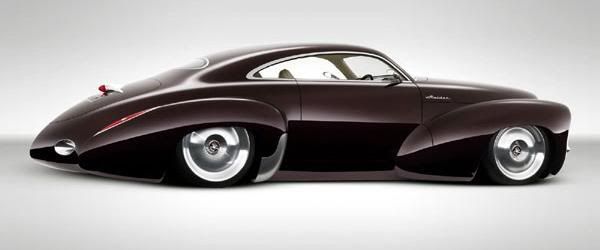
"Modern Retro" as a theme for car and motorcycle customizers and enthusiasts has been going strong for over a decade now. The concept combines nostalgic aesthetics harkening back to the cool, clean, defining lines of the 1950's and 60's with today's modern suspension and chassis design and computer controlled engines and transmissions, and manufacturers have gotten into the game as well - witness the latest incarnation of the Ford Mustang and the Chrysler 300, just to name two. Well, Holden, GM's subsidiary manufacturer in Australia, has gotten into the game with the EFIJY, shown above.
...the acclaimed concept car will be shown at the North American International Auto Show in Detroit next month – the first time it has been seen outside Australia. EFIJY is a contemporary reincarnation of an iconic Australian-made 1953 Holden FJ sedan, restyled as a low-slung hot rod with a supercharged six-litre V8 engine. The car has been featured in magazines, websites and television programs around the world. Its most critical acclaim came from the United States when it was named Hot Rod of the Year by the influential Hot Rod magazine.
The FJ Holden is an Australian icon – Australian designed and built, the Australian public identified with the car and it remains as an instantly recognisable and much loved symbol of Australia during its most prosperous period. As the runaway best seller of the fifities, a goodly proportion of Australia’s population either owned one or was conceived in one. Now the car has been reprised by Holden in a wild 21st Century hot rod concept unveiled today at the Australian International Motor Show in Sydney. Known as the EFIJY (an effigy is a stylistic representation of someone or something famous) is a radical pillarless custom coupe boasting a supercharged six-litre V8 engine, a Chevrolet Corvette underbody and state-of-the-art automotive technology throughout.
That 6.0 liter V8, known as the LS2, is standard in the Corvette and in the Holden Commodore SS and various other cars in the limited edition, high performance Holden line, Holden Special Vehicles (HSV.) The normally aspirated LS2 delivers 400 horsepower and 400 lbs./ft. of torque in completely stock trim, and my experience in building quite a few 5.7 liter LS1's prior to leaving the States tells me that this supercharged LS2 should be making well over 500 horespower and near 600 lbs./ft. of torque with only low levels of boost, maintaining the driveability and reliability that the GenIII small block is reknowned for.
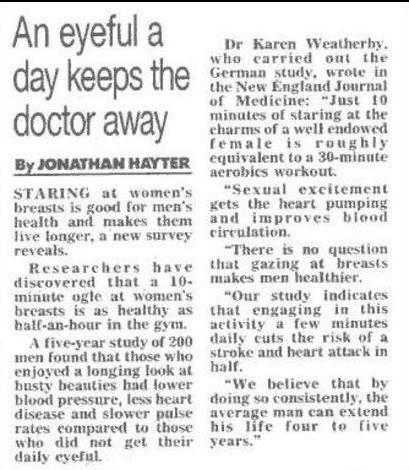
More photos shown here and here. Hat tip: Vilmar ********************************************************** *************************************************************** MEDICAL NEWS - FOR THE GUYS So, in the interest of men's health... "Sure beats walking!" Hat tip: Raybo